Problem
Gulf grocery chains see demand swing hard around Ramadan, Eid, school holidays and payday, and the Islamic holidays move about 11 days earlier each year on the Gregorian calendar. Forecasting tools built for Western calendars miss these shifts, so stores run out of dates, laban and lamb before Iftar and then write off fresh produce afterwards. Fresh waste of 6–9% of sales is common, and much of it was flown in.
Solution
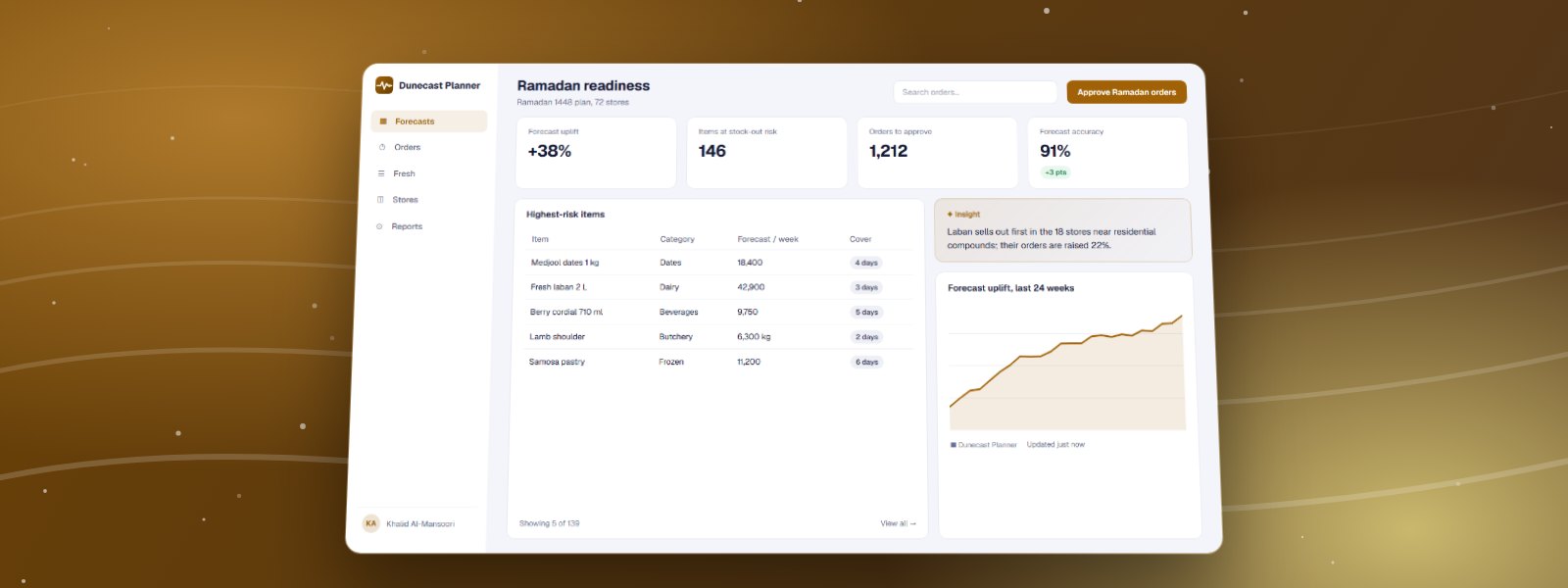
Dunecast forecasts demand per item, store and day using the Hijri calendar, prayer times, weather, promotions and local events, then turns forecasts into suggested orders that respect supplier lead times and shelf life. Buyers approve orders on one screen, and store managers get markdown suggestions for items close to expiry. It connects to the retailer's point-of-sale and ERP systems through nightly files or APIs.
Target market
Grocery chains, hypermarkets and convenience operators across the GCC, a grocery market of roughly US$100B a year where a few dozen chains account for most sales.
Business model
Annual subscription per store (US$4K–US$9K depending on format and SKU count), with a waste-reduction bonus in the first year for chains above 50 stores.