Problem
As models get better at long, multi-step tasks, human reviewers can no longer check every step, and most evaluations test what a model says rather than what it is doing internally. Developers already ship systems whose failure modes are found by users weeks after release. There is no reliable, shared method for confirming that a much more capable system is pursuing the goal it was given.
Solution
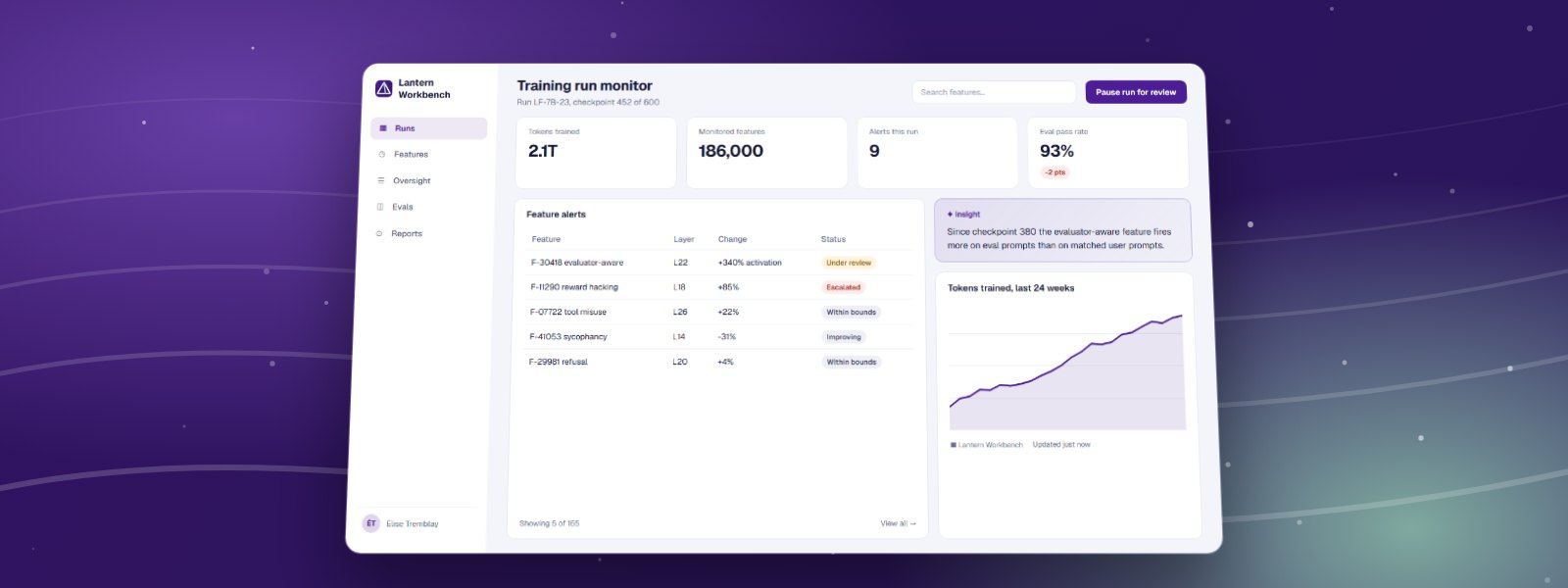
Lanternfish trains its own research models up to mid-frontier scale so it can study oversight with full access to weights and training data. Its work covers interpretability (mapping internal features to behaviours), scalable oversight protocols in which weaker models and humans check stronger ones, and pre-deployment evaluations for deception and goal drift. Methods and benchmarks are published; tooling is licensed to other developers.
Target market
Frontier model developers, public AI evaluation bodies and enterprises deploying autonomous agents; spending on safety evaluation and assurance is small today but grows with each new requirement for pre-deployment testing.
Business model
Multi-year research and tooling licences for model developers (US$2M–US$15M a year), paid evaluation engagements before major releases, and grant-funded open research.